
Plate
Unknown Artist
ca. 1765
Medium
Tin-glazed earthenware
Dimensions
Diameter: 9 1/8 in. (23.2 cm)
Classification
Ceramics-Pottery
Culture
Italian, Pesaro
Department
European Sculpture and Decorative Arts
Museum
Metropolitan Museum of Art, New York, NY
Credit
The Hans Syz Collection, Gift of Stephan B. Syz and John D. Syz, 1995
Accession Number
1995.268.87
Rights
Public Domain
Tags
Art Historical Context
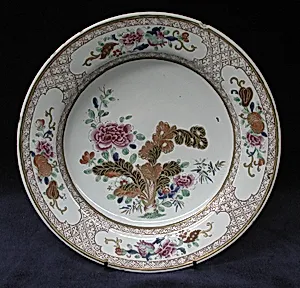
This elegant plate, crafted around 1765 in Pesaro, Italy, exemplifies the enduring tradition of tin-glazed earthen, known as maiolica. Measuring 9 1/8 inches in, it features a classic white tin glaze over a fired earthenware body, which created an opaque, smooth surface ideal for vibrant painted decorations—here, delicate floral motifs that evoke the Rococo era's love for nature-inspired ornamentation. Pesaro, a key ceramic center on Italy's Adriatic coast, was renowned for such wares from the Renaissance through the 18th century, blending utility with artistry. The tin-glazing technique, introduced to Europe from the Islamic world, allowed artisans to apply bold colors that wouldn't run during firing, making pieces like this both durable for daily use and visually striking. By the mid-1700s, Pesaro potters adapted these methods to produce affordable yet sophisticated tableware for bourgeois homes, reflecting Italy's shift toward lighter, more playful designs amid Enlightenment tastes. Now part of The Metropolitan Museum of Art's European Sculpture and Decorative Arts collection—thanks to the Hans Syz Collection—this plate highlights the cultural role of ceramics in everyday life, bridging function and fine art in 18th-century Italy.