
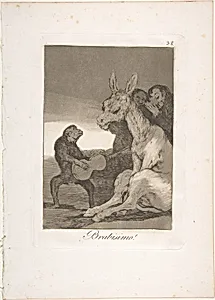
Plate 38 from "Los Caprichos": Bravo! (Brabisimo!)
Medium
Etching, burnished aquatint, drypoint
Dimensions
Plate: 8 7/16 x 5 7/8 in. (21.4 x 15 cm) Sheet: 11 5/8 x 8 1/4 in. (29.5 x 21 cm)
Classification
Prints
Department
Drawings and Prints
Museum
Metropolitan Museum of Art, New York, NY
Credit
Gift of M. Knoedler & Co., 1918
Accession Number
18.64(38)
Rights
Public Domain
Tags
Art Historical Context
In Francisco de Goya's *Los Caprichos*, Plate 38, titled *Bravo! (¡Bravísimo!)* (1799), captures a satirical scene of folly through anthropomorphic animals: a donkey enthusiastically applauds a monkey strumming a guitar. This exemplifies Goya's biting critique of Spanish society's superstitions, ignorance, and adulation during the late Enlightenment era, just before the Napoleonic Wars disrupted Spain. Published as part of an 80-print album self-financed by Goya, the series exposed human vices disguised as animal antics, challenging viewers to reflect on their own shortcomings. Goya masterfully combined etching for precise lines, burnished aquatint for velvety tonal gradients, and drypoint for expressive burrs, creating dramatic contrasts on the modest plate (8 7/16 x 5 7/8 in.). These intaglio techniques allowed affordable yet richly textured prints, making his social commentary accessible beyond elite patrons. Housed in the Metropolitan Museum of Art's Drawings and Prints department, this work highlights Goya's shift toward Romanticism's emotional depth and dark humor. Today, *Los Caprichos* remains a cornerstone of printmaking, influencing modern satire and reminding us of timeless human absurdities—like cheering mediocrity with unbridled enthusiasm.
About the Artist
Goya (Francisco de Goya y Lucientes) · 1746–1828
Francisco José de Goya y Lucientes (1746-1828) was a Spanish painter and printmaker considered the last of the Old Masters and the first of the moderns. Rising from modest provincial origins to become First Court Painter to Charles IV, Goya's career spanned the Enlightenment's optimism and the brutal Napoleonic invasion that shattered it. A mysterious illness in 1793 left him permanently deaf and ...