
Plate
Unknown Artist
1470–1490
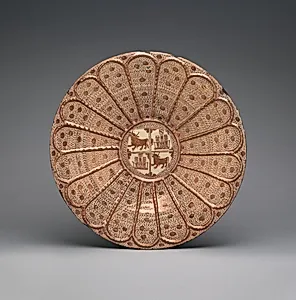
Medium
Tin-glazed earthenware
Dimensions
Overall: 2 15/16 x 17 in. (7.5 x 43.2 cm)
Classification
Ceramics
Culture
Spanish
Department
The Cloisters
Museum
Metropolitan Museum of Art, New York, NY
Credit
The Cloisters Collection, 1956
Accession Number
56.171.104
Rights
Public Domain
Tags
Art Historical Context
This elegant Spanish plate, crafted between 1470 and 1490, exemplifies the artistry of late medieval ceramics from the Iberian Peninsula. Made of tin-glazed earthenware technique where a tin-oxide glaze creates a brilliant white surface ideal for vibrant painted designs—this dish measures an impressive 2 15/16 x 17 inches, suggesting it served as a grand serving platter or charger for communal feasts. Housed in The Cloisters Collection at the Metropolitan Museum of Art since 1956, it reflects the height of Spain's ceramic tradition during a time of cultural flourishing under Reconquista influences and emerging Renaissance styles. The tin-glazing process, inherited from Islamic potters in regions like Valencia and Manises, allowed Spanish artisans to produce durable, decorative wares that rivaled imported luxury goods. These plates were prized in wealthy households for their luster and motifs, often evoking nature, heraldry, or geometric patterns, blending Mudéjar (Moorish-influenced) aesthetics with Christian symbolism. Though the anonymous maker remains unknown, such pieces highlight Spain's role as a bridge between Eastern and Western ceramic innovation. Today, this plate invites visitors to ponder daily life in 15th-century Spain—where humble clay transformed into symbols of hospitality and status—offering a tactile glimpse into a vibrant, multicultural past.