
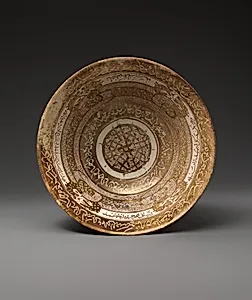
Bowl with Dragons
Unknown Artist
dated A.H. 607/1210 CE
Medium
Stonepaste; glazed in opaque white, luster-painted, part of the inscription scratched in luster
Dimensions
H. 4 1/4 in. (10.8 cm) Diam. 8 7/16 in. (21.4 cm) Wt. 15.3 oz. (433.8 g)
Classification
Ceramics
Department
Islamic Art
Museum
Metropolitan Museum of Art, New York, NY
Credit
Rogers Fund, 1961
Accession Number
61.40
Rights
Public Domain
Tags
Art Historical Context
This exquisite *Bowl with Dragons*, dated A.H. 607 (1210 CE), exemplifies the pinnacle of medieval Islamic ceramic artistry. Crafted from stonepaste—a composite material of quartz, clay, and frit that mimicked porcelain's translucency—this shallow bowl measures just 4¼ inches high and 8⅜ inches in diameter, yet its opulent design belies its everyday origins as a table vessel. Housed in the Metropolitan Museum of Art's Art Department (acquired via the Rogers Fund in 1961), it features dragons rendered in shimmering luster paint over an opaque white glaze, a technique that creates a metallic iridescence evoking gold and silver. The luster-painting process was a guarded secret in 13th-century Islamic workshops, likely in Iran or Syria, where artisans applied metallic oxides over the glazed surface and fired the piece in a low-oxygen kiln to achieve its hypnotic glow. Notably, part of the inscription—recording the precise date—is delicately scratched into the luster, showcasing the artist's precision and blending calligraphy with imagery. Dragons, rare yet potent motifs in Islamic art, may symbolize power or protection, possibly drawing from Silk Road exchanges with Chinese traditions. This bowl not only highlights the technical innovation of Islamic ceramics but also their role in daily luxury, bridging utility and splendor in the vibrant cultural landscape of the Abbasid era's aftermath. A true gem for admirers of lusterware's enduring magic!