
Plate
Unknown Artist
early 18th century
Medium
Porcelain decorated in polychrome and gold enamels (Arita ware, Imari style)
Dimensions
H. 2 1/4 in. (5.7 cm); Diam. 10 1/2 in. (26.7 cm)
Classification
Ceramics
Culture & Period
Japan · Edo period (1615–1868)
Department
Asian Art
Museum
Metropolitan Museum of Art, New York, NY
Credit
Gift of Harold G. Henderson, 1966
Accession Number
66.155.2
Rights
Public Domain
Art Historical Context
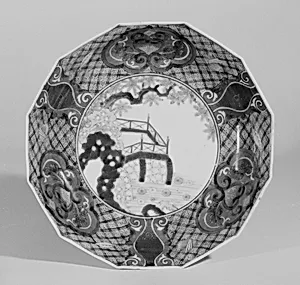
This elegant porcelain plate, crafted in Japan's Arita kilns during the early 18th century Edo period (1615–1868), the pinnacle of Imari-style ceramics. Measuring just 2¼ inches high and 10½ inches in diameter its shallow form was ideal for serving delicate foods or displaying as a decorative object. Produced in the Saga Prefecture's Arita region—famous for its high-fired porcelain using locally sourced kaolin clay—the plate is adorned with vibrant polychrome enamels and, featuring bold motifs typical of Imari ware, such as florals or landscapes in iron-red, cobalt blue, and shimmering gilding. The Edo era's peace and prosperity fueled Japan's export porcelain trade, with Arita pieces shipped worldwide via the port of Imari, captivating European collectors and inspiring their own china factories, like Meissen. Artisans applied overglaze enamels fired at lower temperatures, allowing intricate, colorful designs that contrasted beautifully with the pristine white porcelain body. This technique highlighted Japan's mastery of ceramic innovation, blending functionality with opulent artistry. Today, this plate graces the Metropolitan Museum of Art's Asian Art collection, a generous 1966 gift from Harold G. Henderson. It invites visitors to ponder the global exchange of beauty across centuries, a testament to Edo Japan's cultural radiance.