
Plate
Unknown Artist
ca. 1830–ca. 1835
Medium
Earthenware, transfer-printed
Dimensions
Diam. 9 in. (22.9 cm)
Classification
Plate
Culture
British (American market)
Department
The American Wing
Museum
Metropolitan Museum of Art, New York, NY
Credit
Bequest of Mary Mandeville Johnston, from the collection of Mr. and Mrs. Edward W. S. Johnston, 1914
Accession Number
14.102.116
Rights
Public Domain
Tags
Art Historical Context
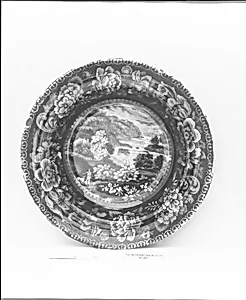
This elegant earthenware plate, produced around 1830–1835 by an unknown British maker for the American market, exemplifies popular tableware that graced middle-class dining rooms during the early 19th century Measuring 9 inches in diameter, its surface is adorned with delicate transfer-printed motifs of flowers and landscapes—timeless designs that evoked the beauty of nature amid the Industrial Revolution's rapid changes. Transfer-printing, the innovative technique used here, revolutionized ceramics production. Inked designs were etched onto copper plates, printed onto tissue paper, and then transferred onto the unfired clay, allowing for affordable, high-quality decoration on earthenware. Staffordshire potteries in Britain perfected this method, exporting vast quantities to America, where such plates symbolized refined taste and transatlantic trade. Housed in The Metropolitan Museum of Art's American Wing, this piece from the 1914 bequest of Mary Mandeville Johnston highlights everyday artistry's cultural role. It bridged British craftsmanship with American domestic life, offering a window into the era's aspirations for beauty in the home.