
Plate
1816
Medium
Earthenware; Redware
Dimensions
Diam. 9 1/2 in. (24.1 cm)
Classification
Plate
Culture
American
Department
The American Wing
Museum
Metropolitan Museum of Art, New York, NY
Credit
Rogers Fund, 1917
Accession Number
17.99
Rights
Public Domain
Tags
Art Historical Context
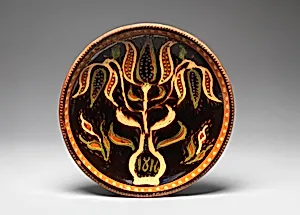
This charming redware plate, crafted by American potter Solomon Grimm in 1816, exemplifies the everyday artistry of early nineteenth-century ceramics. Measuring just over nine inches across, the earthenware piece was formed from the distinctive red clay native to many American regions. Its surface features delicate floral motifs, likely created through slip-trailing techniques that allowed potters to apply liquid clay in graceful patterns before firing. Redware held an important place in American households during this period, serving both practical and decorative purposes in a young nation still developing its own artistic identity. Pieces like this one bridged European folk traditions with local ingenuity, offering affordable beauty to families across the colonies and early states. The floral designs evoke the simple joys of nature, reflecting a broader cultural appreciation for ornamentation in domestic life. Now preserved in the Metropolitan Museum of Art’s American Wing, the plate offers visitors a tangible connection to the skilled hands of early American craftsmen. Acquired through the Rogers Fund in 1917, it stands as a testament to the enduring appeal of handcrafted objects that combined utility with quiet elegance.