
Plate
Unknown Artist
1778
Medium
Earthenware, transfer-printed
Dimensions
Diam. 9 3/4 in. (24.8 cm)
Classification
Plate
Culture
British
Department
The American Wing
Museum
Metropolitan Museum of Art, New York, NY
Credit
Rogers Fund, 1935
Accession Number
35.105.1
Rights
Public Domain
Tags
Art Historical Context
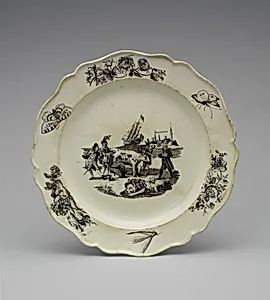
This elegant earthenware plate, crafted in Britain in 1778, exemplifies the innovative transfer-printing technique that transformed ceramic production during the late eighteenth century. Measuring nearly ten inches in diameter, the plate features detailed scenes incorporating men, cows, ships, and lions—motifs likely drawn from popular prints of the era. Transfer printing allowed intricate designs to be transferred from engraved plates onto the glazed surface before firing, enabling consistent decoration at a lower cost than hand-painting and making refined tableware accessible to a broader middle class. As a British import now housed in the Metropolitan Museum’s American Wing, the plate reflects the vibrant transatlantic trade networks that supplied colonial and early American households with fashionable goods. The year 1778 places its creation amid the American Revolutionary War, when British ceramics continued to reach American shores despite political tensions. The combination of pastoral elements like cows with maritime ships and heraldic lions suggests themes of commerce, agriculture, and national identity that resonated in both Britain and its colonies. Such transfer-printed wares represent a pivotal moment in ceramic history, bridging artisanal traditions with emerging industrial methods. Today, this modest yet richly decorated plate offers visitors a tangible connection to the material culture of the late 1700s.