
Plate
ca. 1770
Medium
Soft-paste porcelain
Dimensions
Diameter: 7 1/2 in. (19.1 cm)
Classification
Ceramics-Porcelain
Culture
British, Worcester
Department
European Sculpture and Decorative Arts
Museum
Metropolitan Museum of Art, New York, NY
Credit
Gift of Alfred Duane Pell, 1902
Accession Number
02.6.17
Rights
Public Domain
Art Historical Context
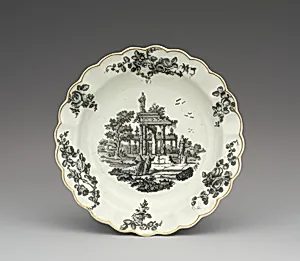
This elegant plate, produced by the renowned Worcester porcelain factory around 1770 and attributed to the skilled engraver Robert Hancock, exemplifies pinnacle of British ceramic innovation during the 18th century. Measuring 7½ inches in diameter, it is crafted from soft-paste porcelain—a, bone-ash formula that Worcester perfected to rival costly Chinese imports. This medium allowed for delicate translucency and intricate detailing, making high-quality tableware accessible to the growing middle class. Robert Hancock, a pioneer of transfer-printing at Worcester, likely adorned this plate with vibrant scenes of human figures amid blooming flowers and lush trees, capturing pastoral idylls inspired by contemporary prints and engravings. Transfer-printing, introduced by Hancock in the 1760s, revolutionized production by enabling precise, repeatable designs in underglaze cobalt blue—far more efficient than hand-painting. These motifs reflected Britain's fascination with nature and leisure, blending artistic elegance with everyday utility. A gift to the Metropolitan Museum of Art in 1902, this piece highlights Worcester's role in establishing Britain as a porcelain powerhouse, bridging decorative arts and cultural refinement for Georgian households. Visitors will appreciate its timeless charm and technical mastery.
About the Artist
Worcester factory|Robert Hancock · 1751–2008
The Worcester porcelain factory, established in 1751 in Worcester, England, by physician Dr. John Wall and apothecary William Davis along with 14 partners, marked the birth of one of Britain's most enduring ceramic enterprises. Investing £4,500 at Warmstry House on the River Severn, the founders drew on contacts with the Bristol porcelain manufactory to develop a novel soft-paste porcelain using s...