
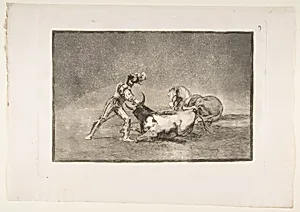
Plate 9 from "La Tauromaquia": A Spanish knight kills the bull after having lost his horse
Medium
Etching, burnished aquatint, burin
Dimensions
Plate: 9 1/2 × 13 3/4 in. (24.2 × 35 cm) Sheet: 12 1/16 × 17 3/16 in. (30.7 × 43.6 cm)
Classification
Prints
Department
Drawings and Prints
Museum
Metropolitan Museum of Art, New York, NY
Credit
Rogers Fund, 1921
Accession Number
21.19.9
Rights
Public Domain
Tags
About this artwork
This Etching, burnished aquatint, burin by Goya (Francisco de Goya y Lucientes) from 1816 exemplifies historical artistic production through its materials, techniques, and aesthetic approach. Created within specific cultural and historical contexts, works like this reflect both individual artistic vision and broader patterns of workshop practice, patron expectations, and prevailing aesthetic theories. The medium of Etching, burnished aquatint, burin required specialized knowledge developed throu...
Art Historical Context
Goya's "Plate9 from La Tauromaquia" presents a tense confrontation between a Spanish knight and bull, moments after the rider has lost mount. Created in 181 as part of a series 33 prints, the work explores the history and drama of bullfighting, a longstanding spectacle in Spanish culture. Francisco de Goya y Lucientes uses the scene to highlight both courage and peril, showing the knight standing his ground with sword raised. The print was made through etching, burnished aquatint, and burin, techniques that allowed Goya to build rich shadows and sharp lines. These methods give the figures a sense of movement and weight, emphasizing the knight's determination against the bull's massive strength. The medium also made the image widely available, letting viewers across Spain engage with themes of tradition and risk. This plate reflects Goya's fascination with national pastimes and human resilience. Acquired by the Metropolitan Museum of Art through the Rogers Fund in 1921, it remains a vivid record of early nineteenth-century Spanish visual culture.
About the Artist
Goya (Francisco de Goya y Lucientes) · 1746–1828
Francisco José de Goya y Lucientes (1746-1828) was a Spanish painter and printmaker considered the last of the Old Masters and the first of the moderns. Rising from modest provincial origins to become First Court Painter to Charles IV, Goya's career spanned the Enlightenment's optimism and the brutal Napoleonic invasion that shattered it. A mysterious illness in 1793 left him permanently deaf and ...