
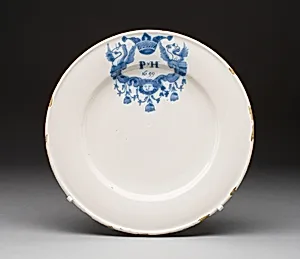
Plate
1699
Medium
Tin-glazed earthenware
Dimensions
Diam.: 26.2 cm (10 5/16 in.)
Classification
plate (general, dish)
Department
Applied Arts of Europe
Museum
Art Institute of Chicago
Accession Number
107473
Rights
Public Domain
Art Historical Context
This elegant plate, crafted in 1699 from tin-glazed earthenware, the refined applied arts of late 17th-century Europe. Measuring 10 5/16 inches in diameter, it as both a functional dish and a canvas for decoration, blending everyday utility with artistic flair. Produced during a time when European potters eagerly emulated the sheen of imported Chinese porcelain, such pieces were prized in prosperous households across the continent. The medium—tin-glazed earthen, often called delftware or maiolica depending on the region—involved coating a simple clay body with a tin-oxide opacified glaze. This innovative technique created an opaque white surface ideal for vibrant painted motifs, which were applied over the unfired glaze and fixed in a low-temperature kiln. Unlike true porcelain, it was affordable and accessible, democratizing luxury tableware while showcasing potters' skill in color and pattern. Housed in the Art Institute of Chicago's Department of Applied Arts of Europe, this anonymous masterpiece highlights the era's cultural exchange and technical ingenuity. Though its exact origin and imagery remain unspecified, it invites us to appreciate how ordinary objects became emblems of sophistication, bridging craft and connoisseurship in the Baroque age.
About the Artist
Unknown
The artist designated as "Unknown" in our virtual museum's collection exemplifies a poignant chapter in art history: creators whose identities have faded into obscurity despite the enduring power of their work. With only one known artwork attributed to them in our holdings, this figure represents countless anonymous hands that shaped visual culture across centuries. Museums worldwide, including th...