
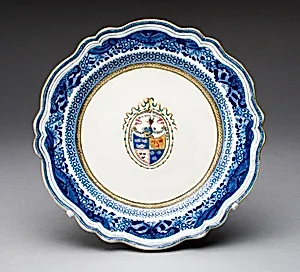
Plate
c. 1780
Medium
Hard-paste porcelain with polychrome enamels and gilding
Dimensions
2.9 × 24.1 cm (1 1/8 × 9 1/2 in.); Diam.: 24.1 cm (9 1/2 in.)
Classification
plate (general, dish)
Department
Applied Arts of Europe
Museum
Art Institute of Chicago
Accession Number
56665
Rights
Public Domain
Art Historical Context
This elegant plate, crafted around 1780, exemplifies the of European hard-paste porcelain production during the late 18 century. Measuring 9½ inches in diameter, it a delicate translucency characteristic of true porcelain—a material Europeans had perfected after centuries of imitating Chinese imports. The surface is adorned with vibrant polychrome enamels, for intricate, colorful designs fired over the glaze, and lavish gilding that catches the light, highlighting its status as a luxury item. In the Applied Arts of Europe, such plates were essential components of elaborate dinner services for the aristocracy and emerging bourgeoisie. Produced in renowned factories across Germany, France, and England, hard-paste porcelain offered superior strength and whiteness compared to softer varieties, enabling finer details and everyday durability despite its opulence. The gilding and enameling techniques reflect advanced kiln mastery, where pieces endured multiple firings to achieve lasting brilliance. Today, at the Art Institute of Chicago, this anonymous masterpiece invites us to savor the era's blend of functionality and artistry. It whispers of lavish banquets and global trade influences, reminding visitors how tableware once served as a canvas for cultural sophistication.
About the Artist
Unknown
The artist designated as "Unknown" in our virtual museum's collection exemplifies a poignant chapter in art history: creators whose identities have faded into obscurity despite the enduring power of their work. With only one known artwork attributed to them in our holdings, this figure represents countless anonymous hands that shaped visual culture across centuries. Museums worldwide, including th...