
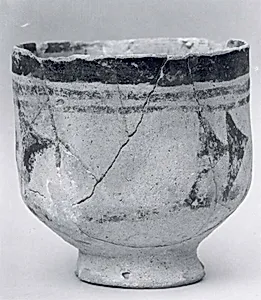
Plate and cup
Unknown Artist
mid 6th–5th millennium BCE
Medium
Ceramic
Dimensions
3 11/16 × 3 5/8 × 3 5/8 in. (9.3 × 9.2 × 9.2 cm)
Classification
Ceramics-Vessels
Culture & Period
Ubaid · Ubaid
Department
Ancient Near Eastern Art
Museum
Metropolitan Museum of Art, New York, NY
Credit
Rogers Fund, by exchange, 1949
Accession Number
49.133.7
Rights
Public Domain
Art Historical Context
Nestled in the Metropolitan Museum of Art's Ancient Near Eastern Art collection, delicate ceramic "Plate and cup" dates to the mid-6th to 5th millennium BCE, hailing from the Uba culture in southern Mesopotamia (modern-day Iraq). Measuring just under 4 inches across, this small vessel exemplifies the ingenuity of one of the world's earliest urban precursors. Crafted by an unknown artist, it reflects the Ubaid people's transition from nomadic life to settled farming communities along the fertile rivers of the Tigris and Euphrates. Ubaid ceramics mark a pivotal advancement in prehistoric technology, likely hand-built or early wheel-formed from fine clay and fired to a durable finish. These vessels were everyday essentials for serving food and drink, underscoring the culture's growing social complexity and agricultural surplus. Simple yet functional, they hint at standardized production in emerging villages, laying groundwork for later Mesopotamian civilizations like the Sumerians. Acquired through the Rogers Fund by exchange in 1949, this artifact offers a tangible glimpse into humanity's deep past—over 7,000 years ago—when pottery became a canvas for survival and subtle artistry in the cradle of civilization.