
Plate Depicting Lady with a Parasol
ca. 1734–37
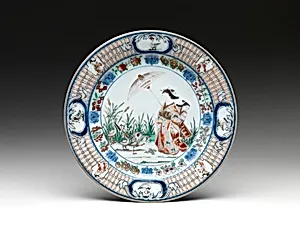
Medium
Porcelain painted with cobalt blue under and colored enamels over transparent glaze (Hizen ware; Imari type)
Dimensions
H. 1 1/4 in. (3.2 cm); Diam. 10 1/2 in. (26.7 cm)
Classification
Ceramics
Culture & Period
Japan · Edo period (1615–1868)
Department
Asian Art
Museum
Metropolitan Museum of Art, New York, NY
Credit
Dr. and Mrs. Roger G. Gerry Collection, Bequest of Dr. and Mrs. Roger G. Gerry, 2000
Accession Number
2002.447.121
Rights
Public Domain
Tags
Art Historical Context
This elegant porcelain plate, created around 1734–37, showcases the refined artistry of Hizen ware from Japan’s Edo period. Painted in cobalt blue under the glaze and vibrant colored enamels over it, the Imari-type design features a graceful lady holding a parasol, accompanied by birds in a delicate composition. Measuring just over ten inches across, the shallow form highlights the technical mastery of Japanese ceramic production, where precise brushwork and layered glazing created luminous, durable surfaces prized by collectors. Although made in Japan, the plate reflects a fascinating cross-cultural exchange. Its design was created by the Dutch artist Cornelis Pronk, who was commissioned by the Dutch East India Company to produce patterns for export porcelain. These works blended European tastes with traditional Japanese techniques, helping shape the global porcelain trade during a time when Japan carefully regulated its foreign contacts. Today, this piece from the Metropolitan Museum’s Asian Art collection offers visitors a window into the Edo period’s blend of restraint and opulence. The subtle integration of parasol, figure, and avian motifs demonstrates how everyday subjects could convey both elegance and narrative charm in export ceramics.
About the Artist
Cornelis Pronk · 1691–1759
Comment on works: Portraits; Views; Landscapes; Interiors