
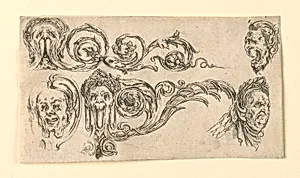
Plate from Frises, Feuillages et Grotesques (Friezes, Foliage and Grotesques)
Classification
ornament
Department
Smithsonian Collection
Museum
Smithsonian American Art Museum
Credit
Purchased for the Museum by the Advisory Council
Accession Number
1921-6-156-d
Rights
Public Domain
About this artwork
Research in Progress
Art Historical Context
Stefano della Bella, a Italian printmaker of the Baroque era (1610–1664), this enchanting plate from his series *Frises,uillages et Groques* around 1645. Working primarily in Florence and Paris, della Bella drew inspiration from the opulent decorative traditions of Renaissance and Mannerist art, blending intricate foliage, friezes, and whimsical grotesques—fantastical motifs featuring intertwined vines, mythical creatures, and playful figures unearthed from ancient Roman ruins. ornamental designs were highly sought after by architects, craftsmen, and designers across Europe. As a prime example of 17th-century printmaking, this work showcases della Bella's virtuosic linework and imaginative compositions, likely executed as an etching to capture fine details and fluid arabesques. Such prints served as pattern books, influencing everything from palace interiors and furniture to textiles and book illustrations, democratizing elite decorative styles for a wider audience. Housed in the Smithsonian American Art Museum's collection, this piece highlights the enduring appeal of Baroque ornamentation, evoking the grandeur of royal courts while inviting modern viewers to trace the evolution of decorative arts. Research continues to uncover more about its production, but its lively elegance remains timeless.