
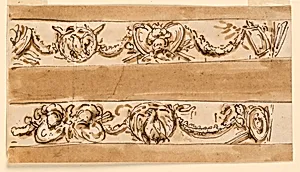
Design for ceiling decoration
1746–1809
Medium
interiors
Classification
interiors
Department
Smithsonian Collection
Museum
Smithsonian American Art Museum
Credit
Museum purchase through gift of various donors and from Eleanor G. Hewitt Fund
Accession Number
1938-88-1867
Rights
Public Domain
About this artwork
Research in Progress
Art Historical Context
Giuseppe Barberi (6–1809), an Italian architect and designer active during the late Enlightenment era, created this *Design for Ceiling Decoration* as part of his work in interior architecture. Housed in the Smithsonian American Art Museum's collection interiors, this piece exemplifies the meticulous preparatory drawings that guided the opulent ceiling treatments in grand palaces and villas of 18th-century Italy. through museum purchase with gifts from various donors and the Eleanor G Hewitt Fund, it reflects the era's fusion of functionality and lavish ornamentation. Ceiling designs like Barberi's were pivotal in neoclassical and transitional styles, where architects sketched intricate patterns of stucco, frescoes, or giltwork to evoke grandeur and harmony. Though specific details of this drawing remain under research, its classification as an interior study highlights the technical precision required—balancing symmetry, scale, and illusionistic effects to transform flat surfaces into dramatic, sky-like expanses. Barberi's Roman background likely influenced motifs drawn from antiquity, making such designs cultural touchstones for elite patronage. Today, this artwork invites visitors to appreciate the behind-the-scenes artistry of historical interiors, bridging architecture and decoration in a Smithsonian treasure still revealing its secrets through ongoing scholarship.