
Plate (one of a pair)
ca. 1780
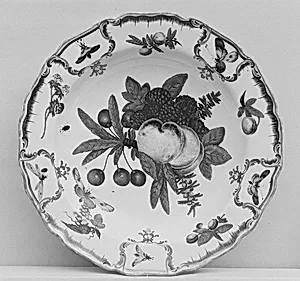
Medium
Soft-paste porcelain
Dimensions
Diameter: 9 in. (22.9 cm)
Classification
Ceramics-Porcelain
Culture
British, Worcester
Department
European Sculpture and Decorative Arts
Museum
Metropolitan Museum of Art, New York, NY
Credit
Gift of Mr. and Mrs. Luke Vincent Lockwood, 1939
Accession Number
39.140.167
Rights
Public Domain
Tags
Art Historical Context
This exquisite plate, one of a matching pair crafted by the Worcester factory around 1780, exemplifies the golden age of British porcelain production. Made from soft-paste porcelain—a refined, creamy material blending clay, glass frit, and soapstone—the 9-inch diameter dish was designed for elegant table settings during the late Georgian period. Worcester, founded in 1751, rose to prominence by rivaling Chinese imports with affordable yet luxurious ceramics, perfect for the growing middle and upper classes. The plate's charm lies in its delicate hand-painted overglaze decoration featuring lush fruit and fluttering butterflies, motifs inspired by nature that evoke the Rococo taste for whimsy and abundance. These vibrant enamels, fired at low temperatures to preserve color intensity, highlight Worcester's technical prowess in achieving translucency and fine detail on soft-paste bodies. A gift to the Metropolitan Museum of Art in 1939, this piece from the European Sculpture and Decorative Arts collection underscores Britain's 18th-century ceramic innovation. It transforms everyday dining into art, blending functionality with the era's delight in naturalistic beauty.
About the Artist
Worcester factory · 1751–2008
The Worcester porcelain factory, established in 1751 in Worcester, England, by physician Dr. John Wall and apothecary William Davis along with 14 partners, marked the birth of one of Britain's most enduring ceramic enterprises. Investing £4,500 at Warmstry House on the River Severn, the founders drew on contacts with the Bristol porcelain manufactory to develop a novel soft-paste porcelain using s...