
Plate (part of a service)
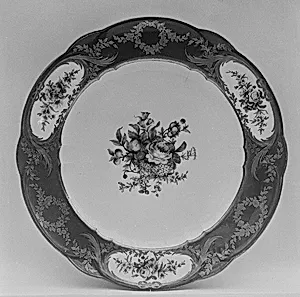
Medium
Soft-paste porcelain
Dimensions
Diameter: 9 3/8 in. (23.8 cm)
Classification
Ceramics-Porcelain
Culture
French, Sèvres
Department
European Sculpture and Decorative Arts
Museum
Metropolitan Museum of Art, New York, NY
Credit
Bequest of Emma T. Gary, 1934
Accession Number
37.20.80
Rights
Public Domain
Tags
Art Historical Context
This exquisite plate, crafted the renowned Sèvres Porcelain Manufactory in1784, exemplifies the pinnacle of French luxury ceramics during the late Louis XVI era. Produced as part of a grand dinner service, it measures 9⅜ inches in diameter and features delicate floral motifs painted by skilled artists Michel-Barnab Chauvaux and Nicquet Sèvres, the royal factory near Versailles, was celebrated for its soft-paste porcelain—a fine, creamy material perfected in France that allowed for intricate molding and vibrant overglaze enameling, rivaling Chinese hard-paste imports. The soft-paste body, fired at lower temperatures, enabled the vivid gilding and hand-painted flowers that bloom across the plate's surface, capturing the opulent tastes of the aristocracy on the eve of the French Revolution. These floral designs reflect the enduring rococo influence blended with emerging neoclassicism, symbolizing nature's abundance in a controlled, elegant form. Techniques like puce (flea-bite red) enamel and gold accents highlight Sèvres' technical mastery, making each piece a canvas for artistic virtuosity. Bequeathed to the Metropolitan Museum of Art in 1934 by Emma T. Gary, this plate invites visitors to savor the refinement of ancien régime tableware—once gracing noble banquets, now a timeless treasure in our European Sculpture and Decorative Arts collection.
About the Artist
Sèvres Manufactory|Michel-Barnabé Chauvaux|Nicquet · 1740–present
The Sèvres Manufactory, one of Europe's premier porcelain producers, was established in 1740 as the Manufacture de Vincennes under the patronage of Queen Marie Leszczyńska, who sought to rival Meissen and Chantilly porcelains with French soft-paste innovations. Initially a private venture, it relocated to Sèvres in 1756 in a purpose-built facility designed by architect Laurent Lindet near Madame d...