
Plate (tagliere)
Medium
Maiolica (tin-glazed earthenware)
Dimensions
Diam. 10 1/8 in. (25.7 cm)
Classification
Ceramics-Pottery
Department
Robert Lehman Collection
Museum
Metropolitan Museum of Art, New York, NY
Credit
Robert Lehman Collection, 1975
Accession Number
1975.1.1090
Rights
Public Domain
Tags
Art Historical Context
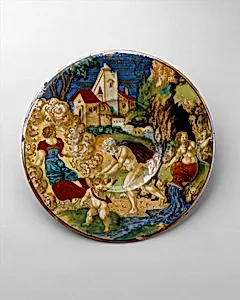
This exquisite maiolica plate known as a *tagere* (a large dish), was crafted in1534 by Francesco X Avelli da Rovigo a master painter of tinazed earthenware from the vibrant workshops of Urbino Italy. Measuring 10⅛ inches in, it exemplifies the Renaissance pinnacle of maiolica production, where everyday ceramics transformed into canvases for elaborate storytelling. Avelli, active in the 1520s–1540s, was renowned his *istoriato* style—highly detailed, painterly scenes inspired by classical myths and contemporary prints—elevating humble plates to collector's treasures. The central imagery bursts with Renaissance sensuality: intertwined male and female nudes, playful Cupids, and graceful women evoke mythological tales of love and desire, possibly drawing from Venusian motifs or Ovid's tales. This bold nudity reflects the era's humanist revival of antiquity, blending eroticism with elegance on the glossy, white tin-glaze surface, which allowed for vivid blues, yellows, and golds fired at high temperatures for jewel-like permanence. Housed in the Robert Lehman Collection at The Metropolitan Museum of Art, this piece highlights maiolica's cultural role in Renaissance dining and display, bridging art and domestic life. Avelli's technical virtuosity—fine line work and subtle shading—made Urbino wares coveted across Europe, influencing later ceramics and underscoring Italy's artistic dominance in the 16th century.