
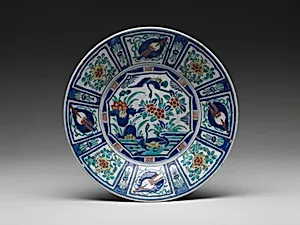
Plate with Geese in Lotus Pond
Unknown Artist
1660–80
Medium
Porcelain painted with colored enamels over transparent glaze (Hizen ware)
Dimensions
H. 2 7/16 in. (6.2 cm); Diam. 12 3/4 in. (32.4 cm); Diam. (foot) 5 3/4 in. (14.6 cm)
Classification
Ceramics
Culture & Period
Japan · Edo period (1615–1868)
Department
Asian Art
Museum
Metropolitan Museum of Art, New York, NY
Credit
Dr. and Mrs. Roger G. Gerry Collection, Bequest of Dr. and Mrs. Roger G. Gerry, 2000
Accession Number
2002.447.56
Rights
Public Domain
Tags
Art Historical Context
This exquisite porcelain plate, titled *Plate with Geese in Lotus Pond hails from Japan's Edo period (1615–1868), crafted between 1660 and 1680 in the Hizen province kilns of Arita—renowned for Hizen ware. Measuring a generous 12¾ inches in diameter, it's a stunning example of overglaze enameling: vibrant colored enamels applied over a transparent glaze and fired at lower temperatures to create vivid, durable hues that wouldn't fade with use. Birds like geese and delicate lotus flowers grace its surface, capturing nature's harmony in a functional yet luxurious dish. During the Edo era's prosperity, Hizen potters mastered porcelain techniques inspired by Chinese models but infused with Japanese aesthetics, producing wares for both domestic elites and export to Europe. This plate's bold motifs—geese amid blooming lotuses—evoke seasonal beauty and tranquility, common in Japanese art where birds symbolize migration and renewal, and lotuses purity rising from mud. As part of the Metropolitan Museum of Art's Asian Art collection, gifted from the Dr. and Mrs. Roger G. Gerry bequest, it highlights the era's ceramic innovation and cross-cultural appeal. Visitors, imagine it gracing a shogun's table or a Dutch merchant's cabinet!