
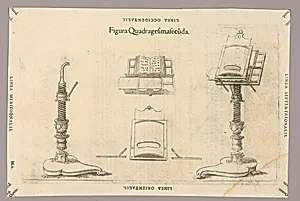
Plate XLII from Theatrum instrumentorum et machinarum
1582
Classification
Department
Smithsonian Collection
Museum
Smithsonian American Art Museum
Credit
Gift of Mrs. George A. Kubler
Accession Number
1949-152-240
Rights
Public Domain
About this artwork
Research in Progress
Art Historical Context
Step into the inventive world of the Renaissance with *Plate XLII from Theatrum instrumentorum et machum*, a captivating print created by Julio Paschale in 1582. This artwork is part of a rare illustrated compendium showcasing mechanical instruments and machines, reflecting the era's fascination with engineering marvels. Published during a time when inventors like Leonardo da Vinci were sketching fantastical devices, Paschale's plate exemplifies the "theater" tradition—lavish visual catalogs designed to dazzle scholars, artisans, and princes with the wonders of human ingenuity. As a finely detailed print, likely an engraving given the period's techniques, it captures the precision required to depict complex gears, levers, and hydraulic systems. These illustrations weren't mere decoration; they served as practical blueprints, bridging art and science in the pre-Industrial Age. Housed in the Smithsonian American Art Museum's collection (gift of Mrs. George A. Kubler), this piece highlights how 16th-century prints democratized technical knowledge, inspiring innovations in mills, pumps, and automata across Europe. Though research continues on this specific plate, its survival offers a window into the intellectual fervor of 1582, when the Scientific Revolution was stirring. Imagine flipping through Paschale's pages in a candlelit study—each image a testament to curiosity's power.