
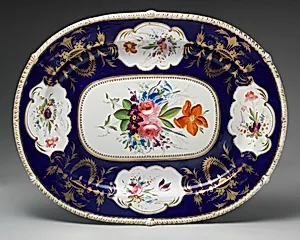
Platter
1814–30
Medium
Soft-paste porcelain
Dimensions
3/16 × 18 in. (0.5 × 45.7 cm)
Classification
Ceramics-Porcelain
Culture
British, Crown Derby
Department
European Sculpture and Decorative Arts
Museum
Metropolitan Museum of Art, New York, NY
Credit
Gift of Henry G. Marquand, 1894
Accession Number
94.4.53
Rights
Public Domain
Tags
Art Historical Context
This elegant platter from Crown Derby, crafted between 1814 and 1830, exemplifies the pinnacle of British porcelain production during the Regency and early Victorian eras. Made of soft-paste porcelain—a medium blending clay, glass frit, and often bone ash for translucency and durability—the, oval form (just 3/16 inch thick and 18 inches long) designed for graceful table service. Crown Derby, based in Derbyshire, England, its "Crown" designation through royal patronage, rivaling Chinese imports with innovative techniques like intricate hand-painting and gilding. The platter's floral motifs, a hallmark of Derby's style, reflect the era's Romantic fascination with nature, rendered in vibrant enamels that capture the delicate beauty of blossoms. These designs not only served aesthetic purposes but also showcased the factory's mastery of overglaze decoration, fired at low temperatures to preserve vivid colors. Such pieces were prized by the British elite for their opulence and functionality. Today, this gift from Henry G. Marquand graces the Metropolitan Museum of Art's European Sculpture and Decorative Arts collection, offering a window into 19th-century luxury and the global influence of British ceramics. A testament to craftsmanship, it invites visitors to appreciate the artistry hidden in everyday elegance.