
Platter
1659–1700
Medium
Silver
Dimensions
Overall: 1 1/8 × 16 1/2 × 11 1/2 in. (2.9 × 41.9 × 29.2 cm)
Classification
Metalwork-Silver
Culture
Spanish, Barcelona
Department
European Sculpture and Decorative Arts
Museum
Metropolitan Museum of Art, New York, NY
Credit
The Collection of Giovanni P. Morosini, presented by his daughter Giulia, 1932
Accession Number
32.75.85
Rights
Public Domain
Tags
Art Historical Context
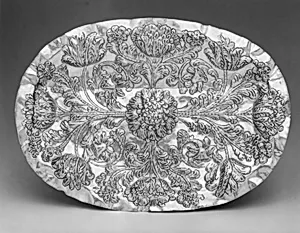
This elegant silver platter, crafted by Barcelona silversmith marked T. V. A. between 1659 and1700, exemplifies theulent metalwork of late 17th-century Spain. Measuring a generous 16½ by 11½ inches, it was designed for serving or display among the elite, its shallow form ideal for presenting delicacies at grand banquets. The piece hails from Barcelona, a vibrant hub of craftsmanship during Spain's Baroque era, when silver—fueled by New World imports—became a symbol of wealth and piety. Adorned with intricate floral motifs, likely executed through repoussé and chasing techniques, the platter showcases the silversmith's mastery in manipulating soft metal to create delicate, naturalistic blooms. These designs reflect Baroque exuberance, blending realism with ornamental flourish, and evoke the era's fascination with nature as divine abundance. Such objects were prized in noble households, bridging utility and artistry in European decorative arts. Acquired as part of Giovanni P. Morosini's renowned collection and gifted to The Metropolitan Museum of Art in 1932 by his daughter Giulia, this platter offers a tangible link to Spain's golden age of silversmithing, inviting visitors to appreciate the enduring allure of handwrought luxury.