
Platter
Unknown Artist
ca. 1760
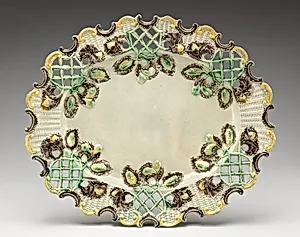
Medium
Creamware
Dimensions
Overall: 11 1/8 × 9 1/2 in. (24.1 × 28.3 cm)
Classification
Ceramics-Pottery
Culture
British, Staffordshire
Department
European Sculpture and Decorative Arts
Museum
Metropolitan Museum of Art, New York, NY
Credit
Gift of Mrs. Russell S. Carter, 1944
Accession Number
44.39.26
Rights
Public Domain
Art Historical Context
This elegant creamware platter, crafted around 1760 in Staffordshire, England—the epicenter of British pottery production—exemplifies the innovative spirit of 18th-century ceramics. 11⅛ × 9½ inches, this oval dish from an unknown artist's hand was designed for everyday dining, yet its refined cream-colored glaze and sturdy earthenware body made it a staple in middle-class households. Staffordshire potters pioneered creamware in mid-1700s, refining lead-glazed earthenware to mimic pricier Chinese porcelain at a fraction of the cost. Creamware's historical significance lies in its democratization of fine tableware. Developed amid the Industrial Revolution's early stirrings, it allowed mass production through molds and kilns, fueling Britain's export boom to Europe and America. This platter, now in the Metropolitan Museum of Art's European Sculpture and Decorative Arts collection (gift of Mrs. Russell S. Carter, 1944), reflects the era's blend of utility and understated beauty, bridging artisanal craft with emerging industry. Fun fact: Creamware caught Queen Charlotte's eye in 1765, earning the nickname "Queen's Ware" and boosting Staffordshire's global fame—proving even simple platters could serve royalty!