
Platter
Unknown Artist
1740–50
Medium
Hard-paste porcelain
Dimensions
Overall: 11 1/8 × 14 5/8 in. (28.3 × 37.1 cm)
Classification
Ceramics-Porcelain-Export
Culture
Chinese, for British market
Department
European Sculpture and Decorative Arts
Museum
Metropolitan Museum of Art, New York, NY
Credit
Helena Woolworth McCann Collection, Gift of Winfield Foundation, 1951
Accession Number
51.86.106
Rights
Public Domain
Tags
Art Historical Context
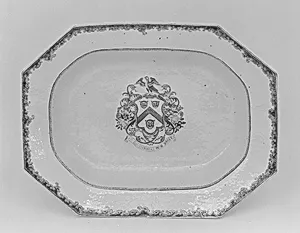
This elegant platter, crafted in hard-paste porcelain around 1740–50, exemplifies the pinnacle of Chinese export ceramics tailored for the British market. 11 1/8 × 14 5/8 inches, it features delicate motifs of birds and a prominent coat of arms likely commissioned for a British family or institution. These armorial designs were a hallmark of luxury tableware, blending Chinese artistry with Western heraldry to create personalized status symbols for elite dining. Hard-paste porcelain, perfected in China centuries earlier, was prized for its translucent durability and fine white body—qualities European potters struggled to replicate until later in the 18th century. Artisans at kilns like those in Jingdezhen painted the surface with vibrant enamels over glaze, firing it at high temperatures to achieve lasting color and sheen. This platter reflects the booming Sino-British trade, where vast quantities of such wares crossed oceans via the East India Company, adorning grand country houses. Today, housed in the Metropolitan Museum of Art's European Sculpture and Decorative Arts collection (Helena Woolworth McCann Collection, 1951), it offers a window into 18th-century global exchange, where Eastern technical mastery met Western tastes for opulence.