
Platter
ca. 1825–ca. 1834
Medium
Earthenware, transfer-printed
Dimensions
16 x 19 1/2 in. (40.6 x 49.5 cm)
Classification
Platter
Culture
British (American market)
Department
The American Wing
Museum
Metropolitan Museum of Art, New York, NY
Credit
Gift of Mrs. Lawrence C. Hogeboom, 1876
Accession Number
76.2
Rights
Public Domain
Tags
Art Historical Context
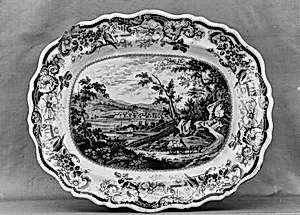
This elegant platter, crafted by British potters James and Ralph Clews around 1825–1834, exemplifies the height of Staffordshire earthenware production for the American market. Measuring a generous 16 x 19½ inches, it served as a statement piece for dining tables in early 19th-century American homes, where imported ceramics bridged the gap between European craftsmanship and growing domestic tastes. The platter's standout feature is its transfer-printed decoration—a revolutionary technique that allowed intricate designs to be mass-produced. Patterns of vibrant flowers and picturesque landscapes, printed from engraved plates onto the unglazed clay before firing, brought affordable luxury to everyday use. Clews Brothers, operating from their Fenton factory, mastered this method, flooding U.S. ports with such wares during a boom in transatlantic trade. Housed in The Metropolitan Museum of Art's American Wing, this gift from 1876 highlights the cultural exchange that shaped American decorative arts. It reflects a time when British potters like the Clews dominated the market, influencing everything from frontier cabins to urban parlors with their blend of whimsy and refinement. A true survivor of lively meals and family gatherings!