
Pleasure Boat
Unknown Artist
19th century
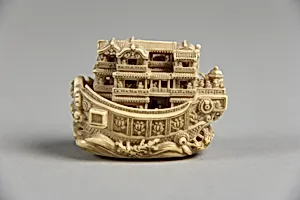
Medium
Ivory
Dimensions
H. 1 1/4 in. (3.2 cm); W. 1 3/4 in. (4.4 cm); D. 7/8 in. (2.2 cm)
Classification
Netsuke
Culture & Period
Japan · Edo (1615–1868) or Meiji period (1868–1912)
Department
Asian Art
Museum
Metropolitan Museum of Art, New York, NY
Credit
Bequest of Stephen Whitney Phoenix, 1881
Accession Number
81.1.39
Rights
Public Domain
Tags
Art Historical Context
Nestled in the Metropolitan Museum of Art Asian Art collection, *Pleasure Boat* is exquisite 19th-century netsuke from ivory by an unknown Japanese artist. just 1¼ inches high, 1¾ inches wide, and⅞ inch deep, this miniature sculpture captures the elegance of a traditional pleasure boat, evoking leisurely outings on Japan's serene waterways. Acquired through the 1881 bequest of Stephen Whitney Phoenix, it the refined artistry of the Edo (1615–1868) or early Meiji (1868–1912) period. Netsuke were essential accessories in Edo-period Japan, serving as toggles to secure inro (small medicine boxes or pouches) to kimono sashes, as belts were not worn. Crafted from ivory—a prized medium for its smooth carvability and luminous quality—artisans demonstrated extraordinary skill in rendering intricate details on such a tiny scale. The boat motif reflects cultural appreciation for nature, leisure, and craftsmanship, blending functionality with sculptural beauty. This piece highlights Japan's netsuke tradition, where everyday objects became coveted art forms, influencing global collectors. Its compact form invites close inspection, revealing the artist's mastery and the joy of 19th-century Japanese life afloat.