
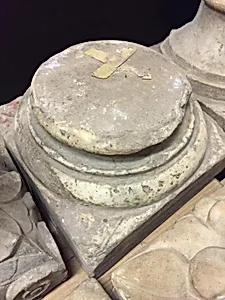
Plinth
Unknown Artist
14th century
Medium
Marble
Classification
Sculpture
Department
Islamic Art
Museum
Metropolitan Museum of Art, New York, NY
Credit
Gift of The Hearst Foundation, 1956
Accession Number
56.234.28.2
Rights
Public Domain
Tags
Art Historical Context
Nestled in the Islamic Art department of the Metropolitan of Art, this 14th-century marble *Plinth* exemplifies the refined architectural sculpture of the medieval Islamic world. As a supporting base typically used for columns, doorways, or monumental structures in mosques and palaces, it reflects the era's emphasis on harmonious design and structural elegance. Crafted during a golden age of Islamic architecture—spanning regions from the eastern Mediterranean to Persia—this unadorned yet precisely carved plinth hints at its role in grand edifices, where such elements grounded ornate facades and symbolized stability and divine order. Marble, prized for its durability and luminous quality, was a favored medium in Islamic art, allowing artisans to achieve smooth surfaces and subtle textures through meticulous carving techniques. Though the artist remains unknown, the plinth's simple form underscores the cultural aversion to idolatry, prioritizing geometric precision and abstract beauty over figurative representation. Its subtle craftsmanship would have complemented intricate arabesques or muqarnas vaults above, contributing to the immersive spiritual environments of Islamic sacred spaces. A generous gift from The Hearst Foundation in 1956, this sculpture invites visitors to ponder the unsung foundations of architectural splendor, bridging everyday utility with timeless artistry. (198 words)