
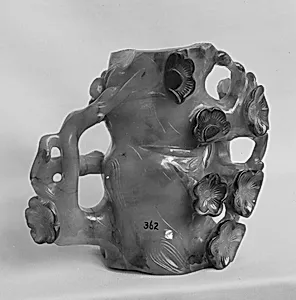
Plum-Tree Vase
Unknown Artist
Medium
Jadeite
Dimensions
H. 4 3/4 in. (12 cm); W. 5 1/4 in. (13.3 cm); L. 2 3/4 in. (7 cm)
Classification
Jade
Culture & Period
China · Ming dynasty (1368–1644)
Department
Asian Art
Museum
Metropolitan Museum of Art, New York, NY
Credit
Gift of Heber R. Bishop, 1902
Accession Number
02.18.362
Rights
Public Domain
Tags
Art Historical Context
Nestled in the Metropolitan Museum of Art's Asian Art collection, this exquisite Plum-Tree Vase, carved from jadeite during China's Ming dynasty (13681644), exemplifies the era's mastery of hardstone sculpture. Standing just 4 3/4 inches tall, with a width of 5 1/4 inches and length of 2 3/4 inches, its compact form belies the intricate artistry involved. Gifted by Heber R. Bishop in1902, the vase likely depicts blooming plum branches—a motif celebrated in Chinese art for its delicate flowers emerging in winter. Jadeite, a vivid green variety of jade prized for its translucency and toughness, held profound cultural significance in imperial China. Revered as the "essence of heaven," jade symbolized purity, immortality, and moral virtue, often reserved for elite scholars and nobility. Ming artisans perfected techniques like incising and hollowing a single block of stone to create such naturalistic forms, showcasing exceptional skill in capturing the plum tree's gnarled branches and blossoms. This vase reflects the dynasty's artistic zenith, blending technical precision with poetic symbolism. The plum blossom, evoking resilience and renewal, resonated deeply in literati culture, reminding viewers of perseverance amid adversity. Though the artist remains unknown, this piece invites contemplation of Ming elegance, bridging everyday appreciation with timeless philosophical depth.