
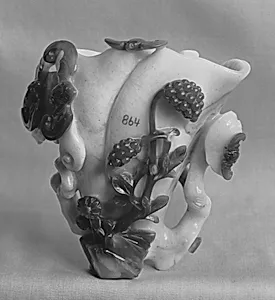
Vase
Unknown Artist
18th century
Medium
Carnelian and white agate
Dimensions
H. 5 7/8 in. (14.9 cm)
Classification
Hardstone
Culture
China
Department
Asian Art
Museum
Metropolitan Museum of Art, New York, NY
Credit
Gift of Heber R. Bishop, 1902
Accession Number
02.18.864
Rights
Public Domain
Tags
Art Historical Context
This elegant vase, crafted in 18th-century China from carnelian and agate, exemplifies the artistry of Qing dynastystone carving. Standing just under six inches tall, the piece showcases the natural beauty of its materials, with warm reddish tones of carnelian contrasting against milky white agate. Likely created for display in an imperial or scholarly setting, such vessels were treasured for their rarity and the immense skill required to shape these exceptionally hard stones. The decorative motifs of grapes and leaves, subtly rendered in the stone’s varied colors, reflect traditional Chinese appreciation for nature’s abundance and symbolic meanings of prosperity and fertility. Hardstone carving reached new heights during this period, as artisans developed techniques to exploit the stone’s inherent patterns rather than relying on added color or paint. This vase, now part of the Metropolitan Museum’s Asian Art collection through the generous gift of Heber R. Bishop in 1902, offers visitors a glimpse into centuries-old Chinese craftsmanship that valued patience, precision, and harmony with natural materials.