
Plume-holder
Unknown Artist
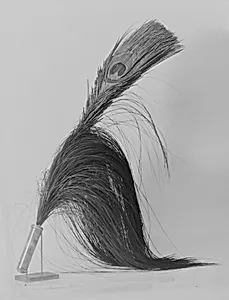
Medium
Jadeite, emerald green
Dimensions
H. 2 5/8 in. (6.7 cm); W. 5/8 in. (1.6 cm)
Classification
Jade
Culture & Period
China · Qing dynasty (1644–1911), Qianlong period (1736–95)
Department
Asian Art
Museum
Metropolitan Museum of Art, New York, NY
Credit
Gift of Heber R. Bishop, 1902
Accession Number
02.18.510
Rights
Public Domain
Art Historical Context
This delicate plume-holder, carved from rare emerald-green jadeite, exemplifies the pinnacle of Qing dynasty jade craftsmanship during the Qianlong (1736–95). Measuring just 2⅝ inches high and ⅝ inch wide, its petite scale belies the extraordinary skill required to shape such a precious material into a accessory. Likely used to secure ornamental feathers in the elaborate headdresses of Manchu nobility or court officials, it reflects the opulence of imperial China under Emperor Qianlong, a fervent collector and patron of the arts. Jadeite, prized for its vibrant translucency and durability, held profound cultural significance in China, symbolizing purity, immortality, and moral virtue. The Qianlong era marked a golden age for jade carving, with workshops producing intricate objects for the elite, blending Confucian ideals with Manchu aesthetics. This piece's flawless emerald hue—exceptionally rare—underscores its status as a luxury item, possibly from the imperial kilns or private ateliers. Today, gifted to the Metropolitan Museum of Art by Heber R. Bishop in 1902, this plume-holder invites visitors to marvel at the fusion of utility and artistry in 18th-century China, a testament to an empire's refined tastes.