
Pocket Watch
1750-1800
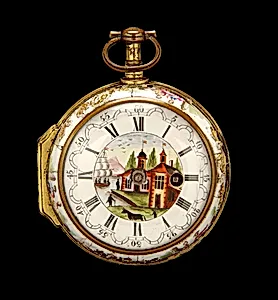
Medium
Decorative Arts
Classification
Decorative Arts
Department
Smithsonian Collection
Museum
Smithsonian American Art Museum
Credit
Smithsonian American Art Museum, Gift of John Gellatly
Accession Number
1929.8.245.54
Rights
Public Domain
Tags
About this artwork
The art of painting on enamel flourished in England during the second half of the eighteenth century. A French jeweler, Jean Toutin, had developed a new technique for painting on enamel, in which a gold base was covered first with white enamel, then painted with a design. This craft soon spread to England, where it was adopted by jewelers and goldsmiths. Their intricately painted boxes and curios were fashionable with the wealthy, who often bought them as souvenirs from their travels. Popular it...
Art Historical Context
This exquisite pocket watch, dating from 1750-1800, exemplifies the art of enamel painting in 18th-century England.inating from a innovative technique pioneered by French jeweler Jeanin, the process involved coating a gold base with white enamel before adding intricate painted designs. This craft quickly captivated English jewelers and goldsmiths, who produced fashionable curios for the wealthy elite—often as travel souvenirs. Pocket watches like this one joined snuff boxes, bonbonnières, and étuis as coveted items blending utility with artistry. Adorned with delicate enamel scenes featuring a horse, architecture, a sailing ship on water, and a figure group, the watch evokes the era's fascination with picturesque landscapes and maritime adventures. These motifs reflect the Grand Tour culture, where affluent travelers collected such treasures from Europe. Its Smithsonian provenance, a gift from John Gellatly, underscores its place in American decorative arts collections. As a functional timepiece transformed into wearable art, this unidentified masterpiece highlights how enamel's translucent glow and fine detail elevated everyday objects into symbols of refinement and wanderlust.
About the Artist
Unidentified ( ) · –