
Pommel Plate
Unknown Artist
ca. 1580
Medium
Steel, gold
Dimensions
8 3/4 x 7 in. (22.2 x 17.8 cm); Wt. 12 oz. (352 g)
Classification
Equestrian Equipment-Saddles
Culture
French or Flemish
Department
Arms and Armor
Museum
Metropolitan Museum of Art, New York, NY
Credit
Rogers Fund, 1929
Accession Number
29.171
Rights
Public Domain
Tags
Art Historical Context
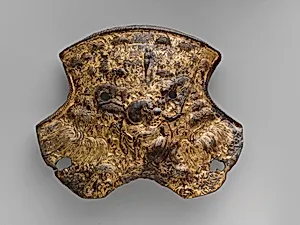
This exquisite *Pommel Plate*, dating to around 1580 and attributed to an unknown French or Flemish artisan, is a highlight of the Metropolitan Museum of Art's Arms Armor collection. Crafted part of high-status equestrian saddles, it the raised front bow—or pommel—where riders gripped during mounted combat, hunts, or parades. In the late Renaissance, such saddles were essential for Europe's nobility, blending functionality with opulent display amid the era's tournaments and cavalry warfare. Made of steel inlaid or gilded with gold, the plate measures a compact 8¾ x 7 inches and weighs 12 ounces, showcasing masterful metalworking techniques. The precious gold accents elevated it from mere utility to a symbol of wealth and prestige, likely featuring intricate chasing or engraving typical of Flemish or French armorers. These details not only protected the rider but also asserted social dominance, evoking the chivalric world of men and horses. Today, this Rogers Fund acquisition invites us to appreciate the artistry behind martial splendor—how everyday equestrian gear became a canvas for cultural ambition. A testament to 16th-century craftsmanship, it reminds visitors of the intimate bond between human, horse, and history.