
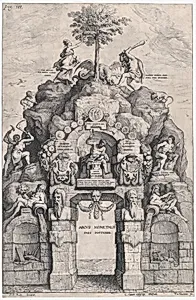
Pompa Introitus...Ferdinand, Austriaci. Antwerp
Medium
Etching
Classification
Prints
Department
Drawings and Prints
Museum
Metropolitan Museum of Art, New York, NY
Credit
The Elisha Whittelsey Collection, The Elisha Whittelsey Fund, 1951
Accession Number
51.501.7501
Rights
Public Domain
Tags
Art Historical Context
**Pompa IntroitusFerdinand, Austaci. Antwerp (1635)** This etching captures the grandeur of the triumphal entry—or *pompa introitus*—of-Infante Ferdinand of into Antwerp in 163. As the newly appointed governor of the Spanish, Ferdinand's arrival was a lavish civic spectacle amid the Eighty Years' War, blending Habsburg pomp with local Flemish pride. Designed by Baroque master Peter Paul Rubens, Latin inscriptions by Jan Caspar Gevaerts and etching contributions from Theodoor van Thulden, the print immortalizes temporary arches adorned with allegorical figures: men and women in classical attire, mythical dragons, lush trees, and ornate coats of arms symbolizing victory and loyalty. Rubens's dynamic compositions, alive with movement and rich symbolism, reflect his signature Baroque style—dramatic, theatrical, and infused with classical antiquity. Etching allowed precise reproduction of these intricate designs, making the ephemeral event accessible to a wider audience. Housed in the Metropolitan Museum of Art's Drawings and Prints department, this work from The Elisha Whittelsey Collection highlights 17th-century Antwerp's role as a cultural hub under Spanish rule, where art served politics and propaganda. A testament to collaborative genius, it invites us to envision the cheering crowds and flickering torches of that joyous day, bridging history and artistry.
About the Artist
Jan Caspar Gevaerts|Peter Paul Rubens|Theodoor van Thulden (Flemish|Flemish|Flemish) · 1593 |1577 |1606 –1666 |1640 |1669
Flemish, 1593–1666|Flemish, Siegen 1577–1640 Antwerp|Flemish, 's-Hertogenbosch 1606–1669 's-Hertogenbosch