
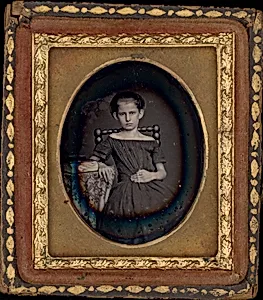
Portrait of a Girl
c. 1854
Medium
daguerreotype
Dimensions
image (visible): 3.1 × 2.5 cm (1 1/4 × 1 in.) mat: 4 × 4 cm (1 9/16 × 1 9/16 in.) case (closed): 5 × 4.5 × 1.5 cm (1 15/16 × 1 3/4 × 9/16 in.)
Classification
Photograph
Department
CPH
Museum
National Gallery of Art, Washington, D.C.
Credit
Ross J. Kelbaugh Collection, Purchased with support from the Ford Foundation
Accession Number
2023.39.13
Rights
Public Domain
Art Historical Context
**Portrait of a Girl**, c. 1854, by Glenalvin Goodridge, offers a poignant glimpse into mid-19th-century America through the lens of early photography. This intimate daguerreotype captures a young girl's direct gaze, rendered in stunning detail on a minuscule silvered copper plate measuring just 3.1 × 2.5 cm. Housed in a protective case, it reflects the era's trend for personal keepsakes, cherished by families as treasured mementos. The daguerreotype process, patented in 1839, revolutionized portraiture by producing one-of-a-kind, highly polished images that shimmered like miniature mirrors. Goodridge, a skilled practitioner active in Pennsylvania, mastered this exacting technique—requiring long exposures and precise chemistry—during photography's infancy. Such small-format portraits were affordable and portable, democratizing the preservation of likenesses in a pre-Civil War society hungry for visual records. Now part of the National Gallery of Art's collection, acquired through the Ross J. Kelbaugh Collection with Ford Foundation support, this work underscores the artistic and cultural pivot from painting to photography. It invites visitors to marvel at the girl's quiet presence, a testament to technology's power to freeze fleeting moments in time.