
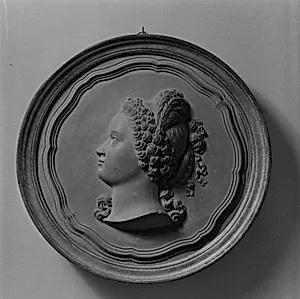
Portrait of a lady
18th century
Medium
Medallion: cast terracotta (terre de Chaumont); frame: gilt wood
Dimensions
Diameter: 6 3/8 in. (16.2 cm)
Classification
Sculpture-Miniature
Culture
French, Chaumont-sur-Loire
Department
European Sculpture and Decorative Arts
Museum
Metropolitan Museum of Art, New York, NY
Credit
Gift of James Hazen Hyde, 1949
Accession Number
49.20.9
Rights
Public Domain
Tags
Art Historical Context
This delicate medallion, created by Jean-Baptiste Nini in 18th-century France, captures the refined elegance of its subject through a profile view. Measuring just over six inches across, the cast terracotta relief is set within an ornate gilt-wood frame, inviting close inspection. Nini, working in Chaumont-sur-Loire, specialized in such intimate portrait sculptures that blended classical ideals with contemporary taste. The choice of terre de Chaumont—a fine local clay prized for its smooth texture—allowed the artist to achieve remarkable detail in the sitter’s features and hairstyle. These miniature terracotta medallions served as accessible alternatives to more costly materials like marble or bronze, reflecting the Enlightenment-era interest in classical cameos and medals. Displayed in the Metropolitan Museum’s collection of European Sculpture and Decorative Arts, the piece exemplifies the period’s appreciation for personal likenesses rendered with both technical skill and artistic grace. Donated in 1949 by James Hazen Hyde, this work offers visitors a glimpse into French decorative traditions of the 1700s, where everyday materials were transformed into enduring tributes to individual identity.
About the Artist
Jean-Baptiste Nini · 1717–1786
Jean-Baptiste Nini, born Giovanni Battista Nini in Urbino, Italy, in March 1717, emerged as a versatile sculptor and medallist whose career bridged the vibrant artistic scenes of Italy, Spain, and France. The son of a modest painter, Nini received his initial training from his father in the rudiments of engraving. He honed these skills in Bologna, where he simultaneously studied sculpture at the A...