
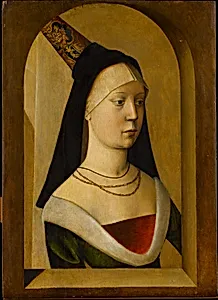
Portrait of a Woman
ca. 1470–80
Medium
Oil on oak panel
Dimensions
22 5/8 x 16 3/8 in. (57.5 x 41.6 cm)
Classification
Paintings
Culture
Franco-Flemish
Department
Robert Lehman Collection
Museum
Metropolitan Museum of Art, New York, NY
Credit
Robert Lehman Collection, 1975
Accession Number
1975.1.129
Rights
Public Domain
Tags
About this artwork
This paintings titled "Portrait of a Woman" by Netherlandish or French dates to ca. 1470–80. Executed in oil on oak panel, this work represents Franco-Flemish artistic traditions. The piece demonstrates the technical skill and artistic vision characteristic of its period. The work's presence in a major museum collection attests to its significance in the broader narrative of art history. As part of institutional holdings, it serves both scholarly research and public education, offering insights ...
Art Historical Context
Step into the refined world of late 15th-century Franco-Flemish portraiture with *Portrait of a Woman*, around 1470–80 by an artist from the Netherlandish or French tradition. This oil painting on oak panel, measuring 22 5/8 x 16 3/8 inches, captures the era's mastery of intimate, lifelike depiction. During this time, the Franco-Flemish region—spanning modern-day Belgium, northern France, and the Netherlands—was a cradle of Northern Renaissance innovation, where artists elevated portraiture from stiff profiles to expressive character studies. The choice of oil on oak panel exemplifies the period's technical brilliance. Oil allowed for translucent glazes and meticulous detail, rendering fabrics, skin tones, and jewelry with luminous realism that rivaled contemporary Italian frescoes. This medium's durability suited the portable, panel format popular among the emerging merchant and noble classes, who commissioned such works to assert identity and status. Housed in the Robert Lehman Collection at The Metropolitan Museum of Art since 1975, this portrait offers a window into the cultural values of its time: women's roles in society, fashion, and the humanist gaze. Though the sitter remains unidentified, her poised presence invites us to ponder the lives of those who shaped Europe's artistic golden age. A gem for scholars and visitors alike, it underscores the enduring allure of Franco-Flemish artistry.