
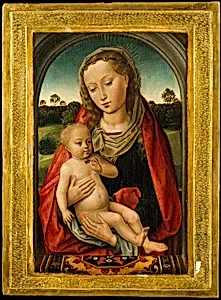
Virgin and Child
Early sixteenth century
Medium
Oil on oak panel
Dimensions
15 1/16 x 11 1/8 in. (38.3 x 28.3 cm); painted surface 12 3/8 x 7 15/16 (31.5 x 20.2 cm)
Classification
Paintings
Culture
Netherlandish
Department
Robert Lehman Collection
Museum
Metropolitan Museum of Art, New York, NY
Credit
Robert Lehman Collection, 1975
Accession Number
1975.1.111
Rights
Public Domain
Tags
Art Historical Context
Hans Memling's *Virgin and Child*, dating to the early sixteenth century exemplifies the refined devotional art of the Netherlandish Renaissance. Painted in oil on an oak panel, this intimate work measures just over 15 by 11 inches, with a slightly smaller painted surface, making it ideal for private worship in a domestic or personal chapel setting. Memling, leading figure in Bruges, drew from the legacy of Jan van Eyck blending meticulous realism with spiritual serenity in his portrayals of the Madonna and. The subject—a tender depiction of the Virgin Mary cradling the infant Jesus—holds deep cultural importance in Northern European Christianity, symbolizing divine love and maternal protection. Oil on panel allowed Memling to achieve luminous glazes, intricate details in drapery, and subtle modeling of flesh tones, hallmarks of Early Netherlandish technique that brought religious icons to vivid life. Such small-scale panels were prized by affluent patrons for personal devotion during the late Gothic to Renaissance transition. Now in the Metropolitan Museum of Art's Robert Lehman Collection since 1975, this piece reflects Memling's enduring influence on portraiture and sacred imagery, inviting viewers to contemplate its quiet grace amid the era's flourishing trade and artistic innovation in the Low Countries.