
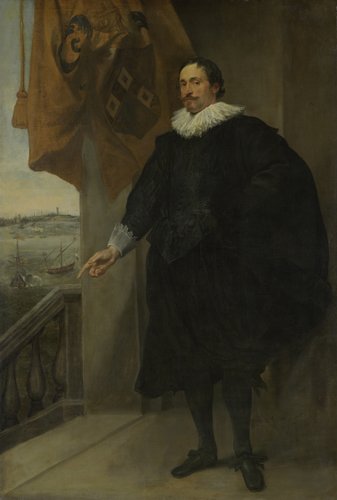
Portret van een edelman, mogelijk Adriaan van der Borcht
1634 - ca. 1635
Medium
oil on canvas
Dimensions
8; 201; 138
Rights
Public Domain
About this artwork
buitenmaat: diepte 8 cm (drager incl. SK-L-4766)
Art Historical Context
This imposing portrait by Anthony van Dyck captures a nobleman, possibly identified as Adriaan van der Borcht, in a full-length, life-size composition. Painted in oil on canvas between 1634 and 1635, the work measures over two meters high, a scale typically reserved for sitters of significant status. Van Dyck, the leading Flemish portraitist of his generation and a former assistant to Peter Paul Rubens, had by this time established an international reputation for his elegant depictions of European aristocracy. The artist’s fluid brushwork and sensitive rendering of fabrics and posture convey both authority and refinement, hallmarks of the Baroque portrait tradition. Large-scale oil paintings like this one allowed Van Dyck to emphasize the sitter’s presence and social standing through dramatic lighting and rich textures, techniques that influenced generations of portrait painters across Europe. Today in the Rijksmuseum collection, the work offers visitors a vivid glimpse into seventeenth-century courtly culture and Van Dyck’s mastery at transforming individual likeness into timeless symbols of nobility.
About the Artist
Anthony van Dyck · 1599–1641
Sir Anthony van Dyck (1599-1641) was a Flemish Baroque artist who revolutionized portrait painting and became the most influential court painter in 17th-century England. Born in Antwerp as the seventh of twelve children to a prosperous silk merchant, van Dyck displayed extraordinary artistic talent from childhood. He trained under Hendrick van Balen before joining Peter Paul Rubens's workshop as a...