
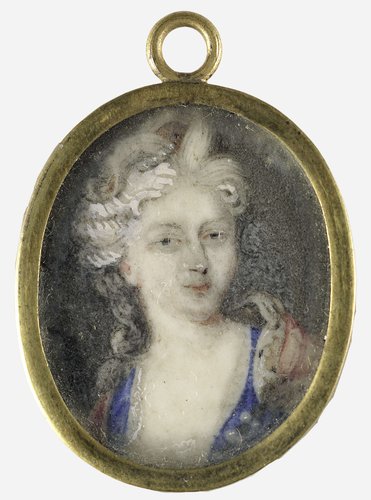
Portret van een vrouw
1710 - 1730
Medium
ivory
Dimensions
2.5; 2.4; 0.3; 3.4; 2.8
Rights
Public Domain
About this artwork
height 2.8 cm x width 2.4 cm
Art Historical Context
Nestled in the Rijksmuseum's collection, *Portret van een vrouw (Portrait of a Woman is a delicate anonymous miniature from 1710–1730, crafted from ivory and measuring just 2. cm high by 2.4 cm wide. This tiny gem exemplifies the intimate portraiture popular in early 18th-century Europe, in the Netherlands, where such works served as cherished personal keepsakes—often worn as lockets, pinned to clothing, or tucked into pockets as tokens of affection or remembrance. Ivory's smooth, luminous surface was prized for miniatures like this, allowing artists to achieve a soft, translucent glow through fine layers of watercolor or gouache. The medium demanded exceptional skill in capturing subtle facial features and expressions on such a minuscule scale, turning everyday portraiture into portable artistry. During this period, amid the refined tastes of the Dutch Regency era, these pieces reflected social customs of gift-giving among the bourgeoisie and nobility. Though the artist's identity remains unknown, the portrait's survival highlights the enduring appeal of these fragile heirlooms, offering a glimpse into private lives from over 300 years ago. Imagine holding a loved one's likeness in the palm of your hand—a timeless blend of craftsmanship and sentiment.
About the Artist
anonymous
In the vast tapestry of art history, "Anonymous" stands not as a singular individual but as a collective designation for countless unidentified creators whose works have endured across millennia. These artists, spanning prehistoric cave painters to medieval illuminators and folk craftsmen, produced the foundational layers of human visual culture. Prior to the Renaissance, when individual fame emer...