
Portret van Johannes Tissel
1793 - 1822
Medium
etching
Dimensions
208; 312
Rights
Public Domain
About this artwork
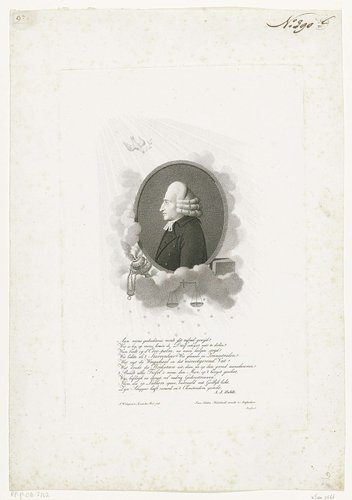
Portret in ovale lijst van Johannes Tissel, Luthers predikant van Amsterdam. Buste naar links. Pauw heeft een zwarte jas aan met een witte bef. De prent heeft een Nederlands gedicht als onderschrift
Art Historical Context
Behold *Portret van Johannes Tissel a finely etched portrait by Jan Willem Caspari, created between 1793 and1822. This intimate bust depiction captures Johannes Tissel, prominent Lutheran preacher in Amsterdam, turned slightly to the left within an elegant oval frame. Dressed in a traditional black coat and crisp white ruff collar, Tissel embodies the dignified attire of 18th- and early 19th-century Dutch clergy, evoking the era's religious and cultural reverence for learned ministers. Etching, the chosen medium, allowed Caspari to achieve remarkable detail and tonal depth on a modest plate (312 × 208 mm), making such portraits affordable and widely distributable. This intaglio technique, involving acid biting into a metal plate, was ideal for reproducing the subtle textures of fabric and the contemplative expression that humanizes Tissel, reflecting the Dutch tradition of commemorative prints honoring civic and spiritual leaders. Adding poetic flair, the print features a Dutch inscription beneath the image, likely praising Tissel's eloquence or piety—a common practice in Northern European portraiture. In the context of Amsterdam's vibrant Protestant scene during the Batavian Republic and Napoleonic years, this work underscores the enduring role of religious figures in fostering community identity, bridging Enlightenment rationalism with faithful tradition. A window into everyday heroism through art.
About the Artist
Jan Willem Caspari · 1779–1859
Jan Willem Caspari (1779–1822) was a Dutch painter, engraver, and draftsman working in Amsterdam during the early nineteenth century, a period of political upheaval and artistic transition in the Netherlands. Though historical records contain some confusion regarding his dates—with some sources listing 1859 as a death year—the weight of evidence suggests he died in 1822 at the relatively young age...