
Powder Horn
Unknown Artist
ca. 1760
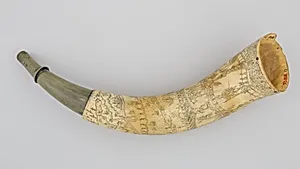
Medium
Horn
Dimensions
L. 14 3/4 in. (37.5 cm); Diam. 3 1/4 in. (8.3 cm); Wt. 13.7 oz. (388.4 g)
Classification
Firearms Accessories-Powder Horns
Culture
Canadian
Department
Arms and Armor
Museum
Metropolitan Museum of Art, New York, NY
Credit
Rogers Fund, 1953
Accession Number
53.158
Rights
Public Domain
Art Historical Context
This elegant powder horn, crafted around 1760 by an unknown Canadian artist, exemplifies the practical artistry of colonial North America. Fashioned from a single animal horn—likely bovine—the slender vessel measures 14¾ inches long with a 3¼-inch diameter, weighing just 13.7, making it lightweight and portable for its essential role: storing black powder for muzzle-loading firearms. Its smooth, curved form, polished to a subtle sheen, highlights the natural material's durability and water resistance, ideal for the rugged demands of frontier life. In the mid-18th century, Canada was a contested colonial landscape amid the Seven Years' War (known in North America as the French and Indian War), where such accessories were vital for soldiers, hunters, and traders. This piece, classified among firearms accessories in the Metropolitan Museum of Art's Arms and Armor Department, reflects the ingenuity of Canadian makers—possibly Indigenous artisans or European settlers—who transformed everyday materials into functional tools. Acquired through the Rogers Fund in 1953, it offers a tangible link to the era's survival culture. Though unadorned in surviving records, the horn's precise shaping and balance underscore skilled craftsmanship, blending utility with quiet beauty. Visitors will appreciate how this modest object captures the grit and resourcefulness of 18th-century Canadian life.