
Powder Horn
1767
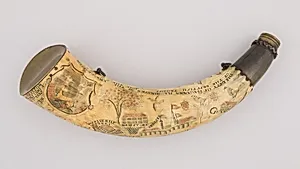
Medium
Horn (cow), iron alloy, copper alloy
Dimensions
L. 13 in. (33 cm); Diam. 3 3/8 in. (8.6 cm); Wt. 13.2 oz. (374.2 g)
Classification
Firearms Accessories-Powder Horns
Culture
Colonial American, St. Augustine, Florida
Department
Arms and Armor
Museum
Metropolitan Museum of Art, New York, NY
Credit
The Collection of J. H. Grenville Gilbert, of Ware, Massachusetts, Gift of Mrs. Gilbert, 1940
Accession Number
40.105
Rights
Public Domain
Art Historical Context
Crafted in 1767 by Peter Robinson in St. Augustine, Florida, this powder horn exemplifies Colonial American ingenuity during a pivotal era of British rule in the region. Acquired just four years after Spain ceded Florida to Britain in 1763, the horn served a vital practical purpose: storing black powder for muzzle-loading firearms. As a key accessory in the Arms and Armor collection at The Metropolitan Museum of Art, it reflects the daily realities of colonial life, where settlers, soldiers, and hunters relied on such tools for survival and defense. Made from a polished cow horn with iron and copper alloy fittings, the piece measures 13 inches long and weighs a sturdy 13.2 ounces, ideal for portability. Robinson's work highlights the era's scrimshaw-like engraving techniques on organic materials, blending functionality with folk artistry. Though decoration details are subtle, the precise metalwork underscores skilled craftsmanship amid frontier conditions. A gift from the J. H. Grenville Gilbert Collection in 1940, this artifact offers a tangible link to St. Augustine's multicultural heritage—Spanish, British, and Indigenous influences—reminding visitors of how everyday objects became emblems of resilience in early America.