
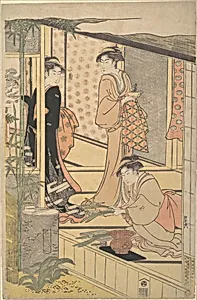
細田栄之画 正月準備|Preparing New Year Decorations
ca. 1788
Medium
Right-hand sheet from a triptych of woodblock prints; ink and color on paper
Dimensions
15 1/2 x 10 1/8 in. (39.4 x 25.7 cm)
Classification
Prints
Culture & Period
Japan · Edo period (1615–1868)
Department
Asian Art
Museum
Metropolitan Museum of Art, New York, NY
Credit
Gift of Estate of Samuel Isham, 1914
Accession Number
JP947
Rights
Public Domain
Tags
Art Historical Context
Hosoda Eishi (1756–1828), a prominent ukiyo-e artist of Japan's Edo period (1615–1868), captures the festive anticipation of New Year's preparations in this vibrant woodblock print, dated around 1788. As the right-hand sheet of a triptych, it depicts elegant women busily arranging traditional decorations, likely kadomatsu—bamboo and pine arrangements symbolizing longevity and prosperity. Eishi's bijin-ga (pictures of beautiful women) style shines here, portraying graceful figures in kimonos amid lush greenery, blending everyday labor with poetic refinement. Woodblock printing, the medium of ink and color on paper, was revolutionary in the Edo era, allowing affordable mass production that brought art to urban commoners. Eishi's meticulous technique—fine lines, subtle gradations (mizuiri-e), and vivid hues—evokes the bustling merchant culture of old Edo (modern Tokyo), where such prints adorned homes and fueled a thriving popular art scene. This intimate scene highlights women's roles in seasonal rituals, underscoring Japan's deep cultural reverence for harmony with nature and renewal. Gifted to the Metropolitan Museum of Art in 1914, it offers a window into 18th-century life, where beauty and tradition intertwined seamlessly.
About the Artist
Hosoda Eishi · 1756–1829
Japanese, 1756–1829