
Prick Spur
Unknown Artist
12th century
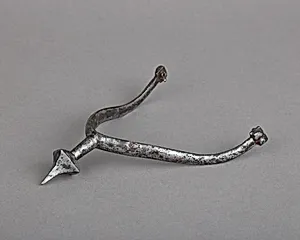
Medium
Iron alloy
Dimensions
L. 5 in. (12.7 cm); W. 3 3/4 in. (9.5 cm); Wt. 2.2 oz. (62.4 g)
Classification
Equestrian Equipment-Spurs
Culture
German
Department
Arms and Armor
Museum
Metropolitan Museum of Art, New York, NY
Credit
Gift of Stephen V. Grancsay, 1942
Accession Number
42.50.253
Rights
Public Domain
Art Historical Context
This 12th-century prick spur, forged from iron alloy, hails from medieval Germany and exemplifies the practical yet ingeniously crafted equestrian gear of the High Middle Ages. Measuring just 5 inches long and weighing a mere 2.2 ounces, its lightweight design allowed knights and riders to wear it comfortably on their boots while directing warhorses with precision. The "prick" to its pointed end, a simple but effective feature for urging mounts forward during tournaments, hunts, or battles—essential tools in an era when cavalry dominated European warfare. As part of the Metropolitan Museum of Art's Arms and Armor collection, gifted by Stephen V. Grancsay in 1942, this spur reveals the advanced metallurgy of German smiths. Iron alloys like this were heated, hammered, and quenched to balance strength and flexibility, reflecting the fusion of functionality and craftsmanship in everyday knightly life. Culturally, it evokes the chivalric world of feudal lords, where mastery of the horse symbolized power and status. Though unsigned by a known artist, such objects were products of skilled anonymous workshops, underscoring how medieval "art" often served martial needs over decoration. A small artifact with big stories, it invites us to imagine the thunder of hooves across 12th-century battlefields.