
Pride (L'orgueil)
1904
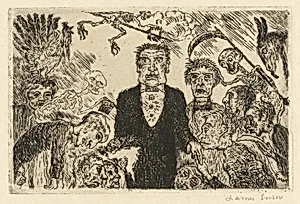
Medium
etching
Classification
Portfolio
Department
CG-E
Museum
National Gallery of Art, Washington, D.C.
Credit
Rosenwald Collection
Accession Number
1964.8.2756
Rights
Public Domain
Art Historical Context
James Ensor’s *Pride (L’orgueil)*, created in 1904 as an etching, offers a biting glimpse into human vanity through the Belgian artist’s distinctive lens. Ensor, a key figure bridging Symbolism and early Expressionism, frequently explored themes of social hypocrisy and moral failings in his prints. This work belongs to a broader tradition of depicting the seven deadly sins, allowing Ensor to merge sharp satire with his fascination for masks, costumes, and exaggerated figures that reveal inner truths. Etching proved an ideal medium for Ensor’s vision, enabling delicate yet incisive lines that capture both intricate detail and emotional intensity. As a printmaking technique, it allowed the artist to reach wider audiences while experimenting with texture and shadow—qualities that heighten the work’s ironic commentary on pride. Part of the Rosenwald Collection at the National Gallery of Art, this etching exemplifies Ensor’s enduring ability to blend personal fantasy with universal critique, inviting viewers to reflect on timeless human foibles.
About the Artist
James Ensor · 1860–1949
James Ensor (1860–1949) was a Belgian painter and printmaker whose visionary, often grotesque imagery anticipated Expressionism, Surrealism, and much of the avant-garde art of the twentieth century. Born in Ostend to an English father and Flemish mother who ran a curio shop selling seashells, masks, and carnival souvenirs — objects that would pervade his art — Ensor studied at the Brussels Academy...