Ctrl K
1860–1949
James Ensor (1860–1949) was a Belgian painter and printmaker whose visionary, often grotesque imagery anticipated Expressionism, Surrealism, and much of the avant-garde art of the twentieth century. Born in Ostend to an English father and Flemish mother who ran a curio shop selling seashells, masks, and carnival souvenirs — objects that would pervade his art — Ensor studied at the Brussels Academy of Fine Arts from 1877 to 1880.
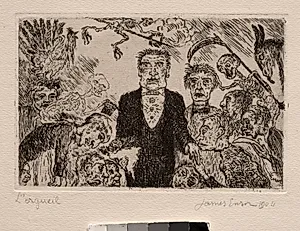
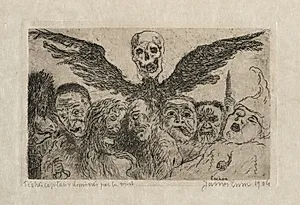
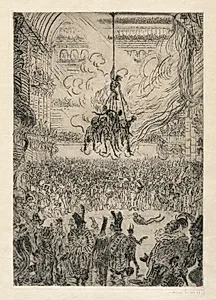
Ensor's early paintings were accomplished Realist works influenced by Courbet and the Impressionists, but by the mid-1880s he developed his characteristic style: satirical, phantasmagoric compositions populated by skeletons, masks, and grotesque carnival figures that combine social criticism with a deeply personal, often disturbing vision. His masterwork, "Christ's Entry into Brussels in 1889" (1888), is a monumental canvas depicting Christ arriving in a modern city amid a seething, mask-wearing carnival crowd — a savage commentary on bourgeois hypocrisy, mob mentality, and the artist's own sense of persecution.
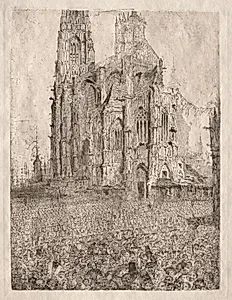
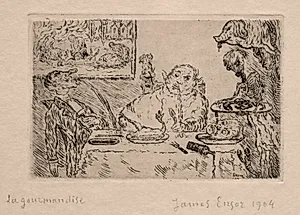
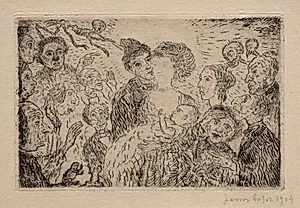
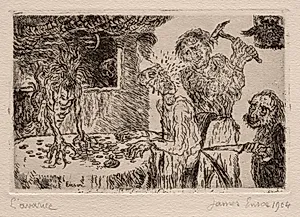
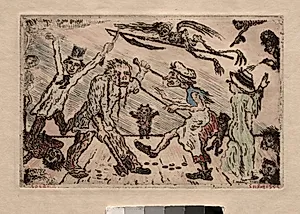
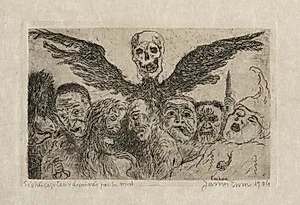
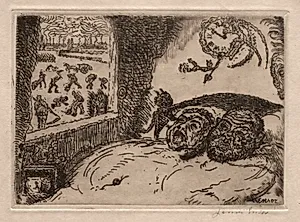
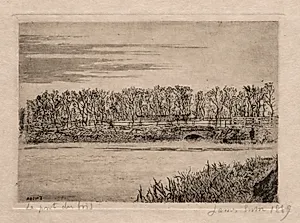
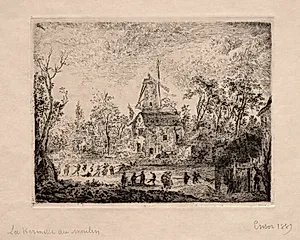
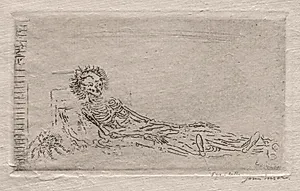
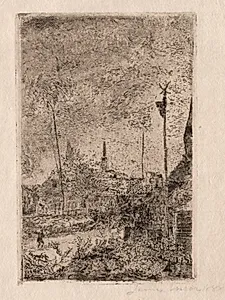
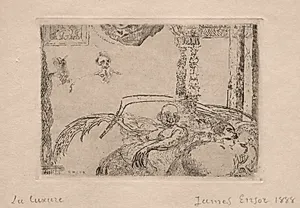
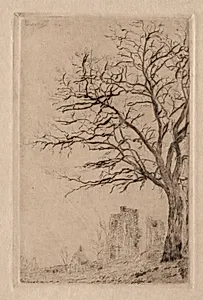
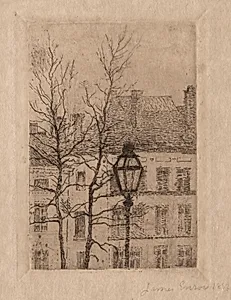
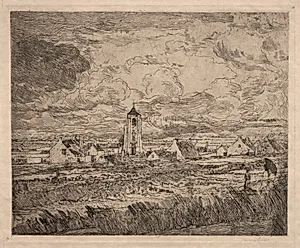
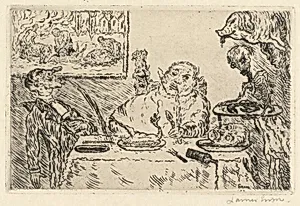
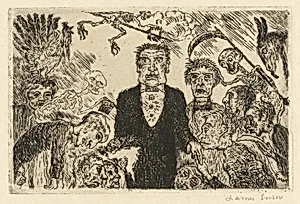
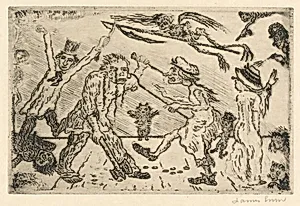
Ensor's paintings and prints — particularly his etchings, which he produced prolifically — feature a cast of recurring motifs: masks, skulls, bizarre creatures, and self-portraits in which the artist appears among the grotesque. His color became increasingly luminous and his compositions more hallucinatory as he developed an artistic language that was decades ahead of its time.
Though his most radical work was produced before 1900, Ensor lived on until 1949, receiving belated honors including a baronetcy from the Belgian king in 1929. His work is held by the Royal Museum of Fine Arts in Antwerp, the Museum of Modern Art, the J. Paul Getty Museum, and the Musée d'Orsay.