
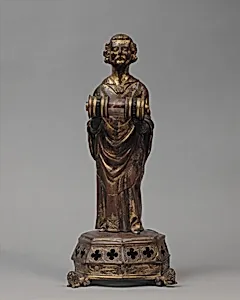
Priest holding a Reliquary
Unknown Artist
third quarter 13th century
Medium
Copper gilt; reliquary vessel: silver, champleve enamel, glass, textile wrapped relic
Dimensions
Overall: 10 3/4 x 5 3/16 x 4 5/8 in. (27.3 x 13.1 x 11.8 cm)
Classification
Metalwork-Copper
Culture
North French
Department
The Cloisters
Museum
Metropolitan Museum of Art, New York, NY
Credit
The Cloisters Collection, 1947
Accession Number
47.101.49
Rights
Public Domain
Tags
Art Historical Context
Step into the medieval world of 13th-century northern France with this exquisite copper gilt sculpture, *Priest Holding a Reliquary*, in the third quarter of century (ca. 1250–1275). Housed in The Cloisters at the Metropolitan Museum of Art, this10¾-inch-tall figure depicts a solemn priest cradling a precious reliquary vessel containing a textile-wrapped relic, visible through glass. Reliquaries like this were vital in Gothic-era Christianity, serving as ornate containers for saints' bones or holy remnants, which drew pilgrims and inspired devotion during processions and masses. The artistry shines in its materials and techniques: the priest's figure is gilded copper, lending a radiant, heavenly glow, while the reliquary features silver adorned with champlevé enamel—a sophisticated medieval method where powdered glass enamel is fired into carved metal channels, creating vibrant, durable colors in blues, reds, and whites. This North French masterpiece exemplifies the era's metalwork mastery, blending functionality with spiritual symbolism to elevate everyday rituals into sacred theater. Though by an unknown artist, its survival and placement in The Cloisters Collection (1947) highlight its rarity, offering visitors a tangible link to the piety and craftsmanship of High Gothic Europe. Gaze closely at the priest's serene expression—he stands as eternal guardian of the divine.