
ca. 1730
Medium
Woodblock print; ink and color on paper
Dimensions
12 1/8 x 5 3/4 in. (30.8 x 14.6 cm)
Classification
Prints
Culture & Period
Japan · Edo period (1615–1868)
Department
Asian Art
Museum
Metropolitan Museum of Art, New York, NY
Credit
The Francis Lathrop Collection, Purchase, Frederick C. Hewitt Fund, 1911
Accession Number
JP688
Rights
Public Domain
Tags
Art Historical Context
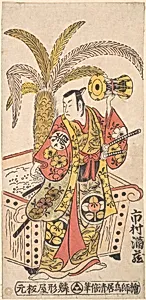
This vibrant woodblock print by Torii Kiyomasu, created around 1730 during Japan's Edo period (1615–1868), captures dynamic world of kabuki theater. Kiyomasu I, a key figure in the Torii school—one of the earliest ukiyo ("pictures of the floating world") workshops—specialized in yakusha-e, or actor prints. These affordable color prints on paper brought the glamour of stage performers to everyday viewers, revolutionizing access to art through woodblock techniques that allowed for mass production. Depicting male actors in samurai roles, complete with swords and drums, the work highlights the theatrical intensity of kabuki, where performers donned elaborate costumes to embody warriors and heroes. The Torii school's bold lines, vivid colors, and expressive poses emphasized dramatic gestures, making these prints collectible souvenirs for theater fans. Measuring just 12 1/8 x 5 3/4 inches, it exemplifies the intimate scale of early ukiyo-e, perfect for personal display. Housed in the Metropolitan Museum of Art's Asian Art Department as part of The Francis Lathrop Collection, this piece offers a window into Edo Japan's urban culture, where entertainment thrived amid peace and prosperity. It's a testament to how art democratized celebrity and storytelling.
About the Artist
Torii Kiyomasu I · 1696–1716
Torii Kiyomasu I was a Japanese ukiyo-e artist working in the early eighteenth century, closely associated with the Torii school, one of the most important lineages in the history of Japanese woodblock printmaking. The Torii school was founded by Torii Kiyonobu, and Kiyomasu I is believed to have been either his son or a close pupil — the precise family relationship remains a matter of scholarly d...