
ca. 1820
Medium
Woodblock print (surimono); ink and color on paper
Dimensions
8 3/16 x 7 3/16 in. (20.8 x 18.3 cm)
Classification
Prints
Culture & Period
Japan · Edo period (1615–1868)
Department
Asian Art
Museum
Metropolitan Museum of Art, New York, NY
Credit
Rogers Fund, 1921
Accession Number
JP1237
Rights
Public Domain
Tags
Art Historical Context
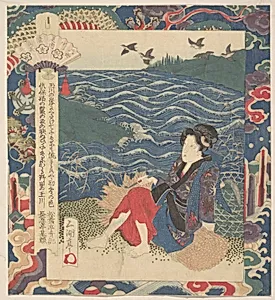
This exquisite woodblock print (surimono) by Yashima Gakutei created around 1820 during Japan's Edo period (16151868), captures the refined artistry of ukiyo-e traditions.akutei, a master of the late ukiyo-e school, renowned for his delicate, poetic compositions often commissioned for private poetry circles. Surimono this one—small-format prints measuring just 8 3/16 x 7 3/16 inches—were luxurious New Year's greetings or celebratory pieces, featuring vibrant inks, subtle colors, and sometimes embossing or mica for a tactile shimmer on fine paper. Depicting elegant women alongside birds, the print reflects Edo-era fascination with nature's harmony and feminine beauty, common motifs in Japanese art symbolizing grace and seasonal change. Woodblock printing techniques allowed for precise layering of colors and intricate details, making surimono prized collector's items among the literati. Acquired through the Rogers Fund in 1921, this gem from the Metropolitan Museum of Art's Asian Art collection offers a window into Japan's vibrant urban culture, where art intertwined with poetry, fashion, and fleeting pleasures. (198 words)
About the Artist
Yashima Gakutei · 1786–1868
Yashima Gakutei (c. 1786–1868), born in Osaka as the illegitimate son of a Tokugawa shogunate samurai named Hirata, adopted the name from his mother's subsequent marriage into the Yashima clan. Little is documented about his early years beyond these familial ties, but he pursued artistic training under the esteemed ukiyo-e masters Totoya Hokkei and Katsushika Hokusai, absorbing their precision in ...